Publishing research in a Scopus-indexed journal is a major milestone for researchers. Understanding Scopus metrics and using AI tools is responsible for journal acceptance. Scopus uses several metrics to evaluate journal quality and impact. The differences help researchers to choose the right journal and avoid predatory or low-impact research.
This blog explains clearly from a journal and editor’s perspective, helping researchers to improve their manuscript quality and publication success.
1. Cite Score
CiteScore measures the average number of citations received per document published in a journal over the past four years, calculated by dividing the total citations received during this period by the number of papers published. It is a simple and transparent metric that is updated annually, making it useful for comparing journals within the same field of study. From an editor’s perspective, a higher CiteScore reflects consistent citation performance and visibility of the journal; however, it is not the sole criterion for manuscript acceptance, as editors also carefully evaluate the relevance, originality, and novelty of each submitted article.
Formula: Cite Score = Citations received in 4 years ÷ Documents published in 4 years
Check Metrics Directly on the Scopus Sources Page:
Scopus provides an official and reliable platform called Scopus Sources where all indexed journals are listed.
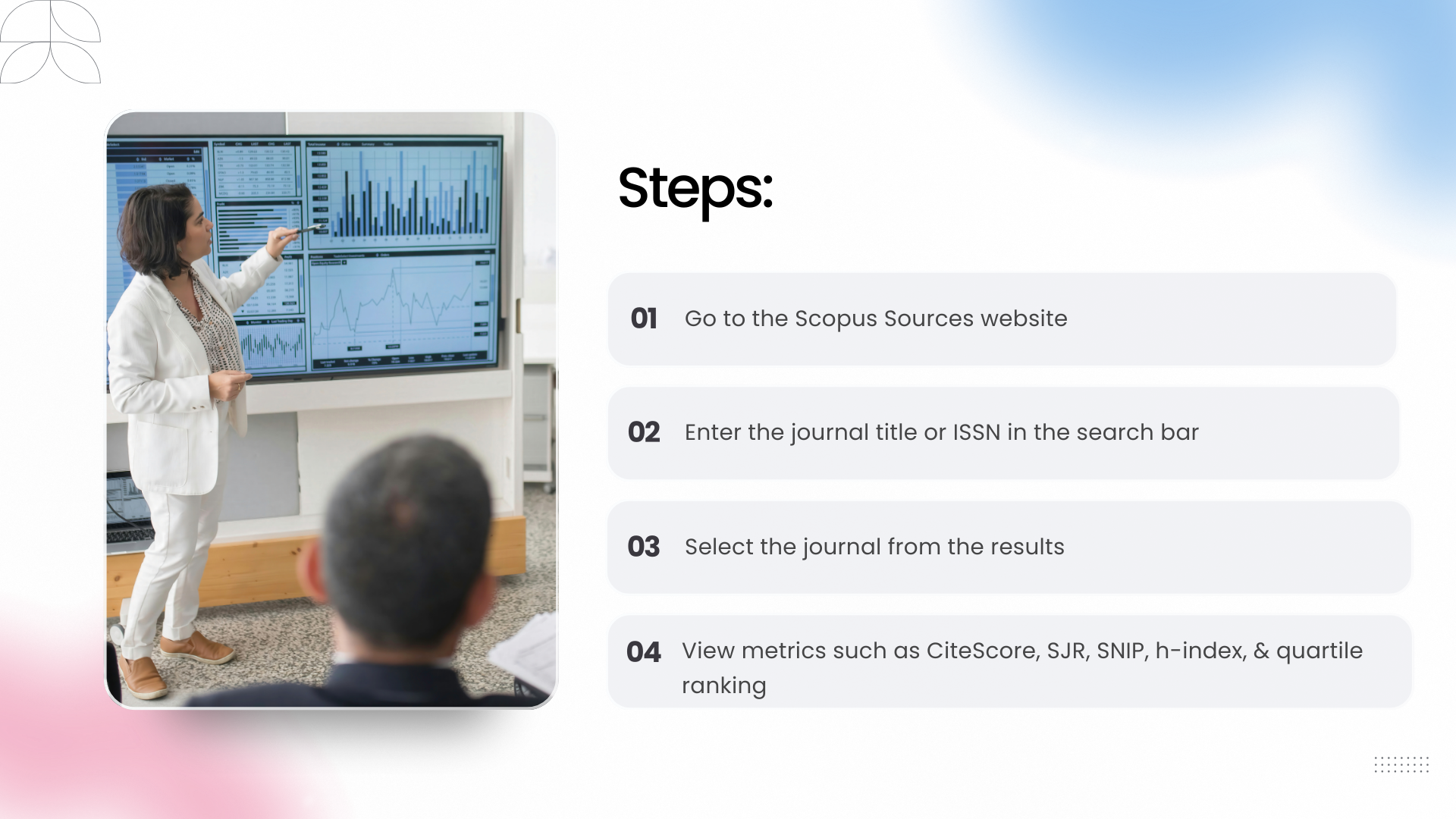
Steps:
Go to the Scopus Sources website
Enter the journal title or ISSN in the search bar
Select the journal from the results
View metrics such as CiteScore, SJR, SNIP, h-index, and quartile ranking
SNIP (Source Normalized Impact per Paper)
SNIP evaluates a journal’s impact by taking into account differences in citation practices across research fields. Instead of treating all citations equally, it adjusts the value of each citation based on how frequently researchers in that subject area tend to cite. As a result, citations received in disciplines where referencing is less common contribute more to the journal’s impact, allowing for a fairer comparison between journals from different academic domains.
SJR (SCImago Journal Rank):
SJR works on the idea that not all citations are equal. Being cited by a respected, high-ranking journal adds more value than being cited by a lesser-known one. By considering both the number of citations and the reputation of the citing journals, SJR provides a more meaningful definition of a journal’s academic impact.
H-index:
The h-index is a number that shows both how many papers someone has published and how influential those papers are based on citations.
Journal Quartile Rankings
Q1, Q2, Q3, and Q4 are journal quartile rankings that indicate a journal’s position within its specific subject category. Journals are ordered based on their impact score (commonly the SJR metric) and then divided into four equal groups. Q1 journals represent the top 25% in a field and are considered the most influential, while Q2 journals fall between the top 25–50%, showing good academic standing. Q3 journals rank between 50–75% and generally have a moderate impact, and Q4 journals are in the bottom 25%, often representing newer or less-cited journals.
Tips to remember: These quartile rankings help researchers to quickly assess a journal’s relative quality and relative importance within its subject area.
FWCI (Field-Weighted Citation Impact)
FWCI compares the actual number of citations received by articles to the expected number of citations for similar publications in the same field. An FWCI value above 1.0 indicates above-average citation impact, making it a useful metric for research performance evaluation.
Cross-Check the Publisher and Indexing Status
Before submission, always:
Confirm the journal is currently indexed in Scopus
Check the publisher’s reputation
Look for clear peer-review and publication ethics policies
From an editor’s viewpoint, metrics help position a journal within the global academic landscape, but they do not replace rigorous peer review. From a researcher’s perspective, understanding Scopus metrics enables smarter journal selection, realistic expectations, and ethical publishing practices.